Things to Do in Whistler in Winter (Besides Skiing)
You do not need to ski to love a Whistler winter. Snowmobiling, ice fishing, the gondola, the baths and the village fill a trip on their own.
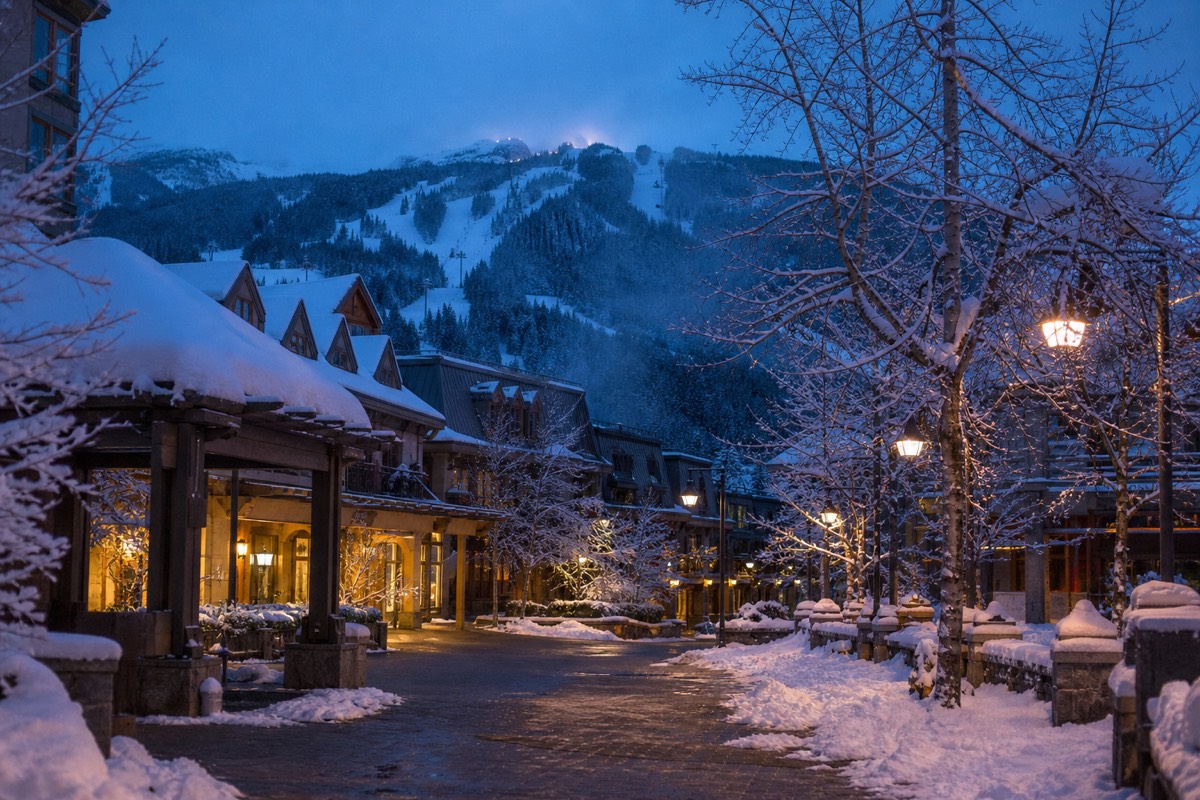
Snow stacks up on the rooftops, the patios glow with heat lamps, and the whole village smells of woodsmoke and cocoa. Skiing built Whistler, but it is only one reason to come in winter. A large share of visitors, families, couples, non-skiers of every kind, spend a full week here without ever clicking into a binding. The mountains, the backcountry and the town all have a winter roster that stands on its own.
This guide covers the best winter activities in Whistler besides skiing: what to do, roughly what it costs, and when the season runs. The guided adventures we point to are run by the operators we work with at Whistler BC Tours, with live prices at each listing. Season dates and gate prices here were checked against the current calendar; treat them as planning allowances and confirm before you commit.
Budget note: original price examples below are planning allowances, not current quotes. Compare the provider’s actual date, currency, party and included extras before relying on a figure.
Plan This Experience
Winter starting point: the Medicine Trail combines old-growth forest, a guide, snowshoes and a return village shuttle.
At a glance: a Whistler winter without skiing
Season and snow windows use the 2026 to 2027 calendar and shift with the weather.
What can you do in Whistler in winter besides skiing?
The non-ski winter list is long: snowmobiling in the Callaghan backcountry, ice fishing on frozen lakes, snowshoeing, the Peak 2 Peak Gondola, the Scandinave Spa baths, tubing at the Coca-Cola Tube Park, sleigh rides, the Vallea Lumina night walk, and skating and strolling in the village itself.
Whistler's winter divides neatly into things on the snow, things in the backcountry and things in the warm. You can spend a morning racing a snowmobile across a frozen lake, thaw out in a steaming Nordic pool by afternoon, then walk the lit village at night. None of it needs ski legs. The pillar guide to the year-round things to do in Whistler puts winter in context; the menu below is the winter-only shortlist, split by where you will be.
The split is worth holding in mind as you plan. The backcountry days, snowmobiling and ice fishing, need a guide and a shuttle and eat a half-day each. The on-snow fun close to town, tubing, snowshoeing and skating, slots into any spare hour. The warm rewards, the spa and the lodge lunches are the glue between them. Pick one from each column and a non-skier never has a flat day, whatever the weather does.
| Activity | Setting | Roughly | Best for |
|---|---|---|---|
| Snowmobiling | Backcountry | from US$249 | Adventure, couples |
| Ice fishing | Frozen lake | from US$164 | Quiet, novel days |
| Snowshoeing | Forest and Nordic parks | Rental or guided | All fitness levels |
| Peak 2 Peak Gondola | Alpine | With lift ticket | Views, non-skiers |
| Scandinave Spa | Indoor and outdoor | from CA$118 | Relaxing, adults |
| Tube park | Base of the gondola | Hourly ticket | Families, quick fun |
| Sleigh ride | Callaghan or Blackcomb | Guided | Couples, families |
| Vallea Lumina | Forest at night | CA$50 to 55 adult | Evenings, families |
Which winter activity suits your fitness and nerve?
The non-ski roster spans the whole range. Snowmobiling and tubing ask for nerve more than fitness; snowshoeing and sleigh rides ask for neither. Ice fishing, the gondola and the spa are gentle enough for any age. Only the backcountry snowmobile run carries a real pulse-raising edge, and even that is guided at your own pace.
Choosing well is mostly about being honest over what your group actually enjoys. Adrenaline and cold do not suit everyone, and Whistler is kind enough that no one has to push. The snowmobile run rewards a taste for speed but stays fully guided; tubing is a controlled thrill anyone can handle. At the calm end, the gondola, the museums, a sleigh ride and the Scandinave baths ask nothing of your legs at all. This is also the heart of the wider question of what non-skiers actually do here. The table sorts the main options by effort and nerve, so you can build a day that fits the slowest and the boldest in the group.
| Activity | Physical effort | Nerve needed | Suits |
|---|---|---|---|
| Snowmobiling | Low to moderate | Moderate | Confident beginners up |
| Ice fishing | Low | None | All ages, families |
| Snowshoeing | Moderate | None | All fitness levels |
| Tubing | Low | Low | Families, quick fun |
| Peak 2 Peak Gondola | None | None | Everyone, all ages |
| Scandinave Spa | None | None | Adults, couples |
| Sleigh ride | None | None | Couples, families |
When is Whistler's winter season?
Whistler Blackcomb opens for the 2026 to 2027 winter on November 20, 2026 and typically runs to around mid-May, weather permitting. The most reliable snow is January and February. Backcountry snowmobiling and ice fishing usually run December through April, so the deep-winter months carry the fullest activity roster.
Winter here is long, and the experience changes across it. Early season, from the November 20 opening, can be lean at low elevation while the alpine fills in. January and February bring the deepest, most reliable snow and the coldest air, ideal for snowmobiling and the frozen lakes. March and April soften into bluebird spring days that many regulars love. If you are choosing dates, our guide to the best time to visit weighs snow against crowds and daylight. The scorecard below covers the winter months.
| Month | Snow | Daylight | Crowds | Notes |
|---|---|---|---|---|
| November | Building | Short | Light | Opening day around the 20th |
| December | Good, festive | Shortest | Holiday peak | Village at its most festive |
| January | Deep, cold | Short | Busy, dips mid-month | Best for backcountry snow |
| February | Deep, reliable | Lengthening | Busy | Prime all-round month |
| March | Strong | Longer | Spring-break peak | Sun and snow together |
| April to mid-May | Spring snow up high | Long | Quiet | Warm days, deals |
What is snowmobiling in Whistler like?
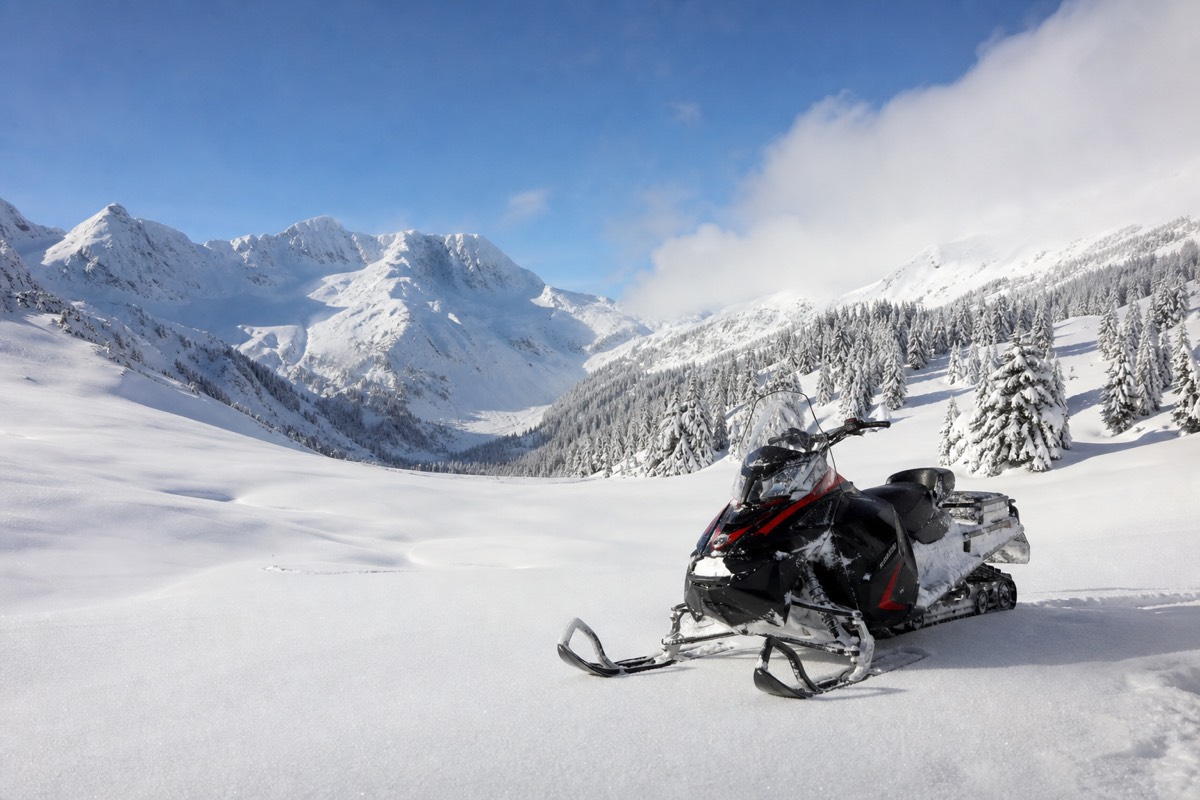
Guided snowmobile tours climb into the Callaghan Valley, the Nordic venue from the 2010 Games, running forested singletrack and open runs across frozen lakes. The wilderness run is a separate paid activity. Machines, helmets and training are provided; the season runs December through April.
The backcountry snowmobile run is Whistler's most-booked winter adventure for good reason. A shuttle takes you from the village up to a staging area in the Callaghan, where guides fit you out and run a training session before leading into the trees. From there it opens up: powder banks, tight forest trails and wide frozen lakes where you can let the throttle out. It suits confident beginners and up, and pairs naturally with the frozen-lake fishing in our guide to guided winter adventures. Bring real winter gear; the wind chill at speed is serious.
Most tours offer a driver and a passenger option, so a nervous rider can share a machine while the confident take their own. The Callaghan sits higher than the village and holds snow deep into spring, which is why the season stretches December through April even in a lean year. Count on a half-day out once travel and training are added in, and dress in real layers with goggles and warm gloves, because the wind chill bites hard at speed. Mixed-nerve groups do well here: the guide sets the pace, and the open lake runs let stronger drivers stretch out while others cruise.
Can you go ice fishing near Whistler?
Yes. Guided ice fishing sets you up in a heated tent on a frozen lake near Whistler, with rods, tackle, insulated boots and instruction included. It suits complete beginners and families, and is a quiet, novel half-day. The trip has its own activity requirements, and all fish are released.
Ice fishing is the calm counterpoint to the snowmobile roar. Your guide picks you up, drives to one of a few backcountry lakes, drills through the ice and sets up a heated shelter so you can fish in comfort while the wind howls outside. The target is wild rainbow trout, and the day runs catch-and-release. You will need a British Columbia freshwater fishing licence, a small extra cost the operator helps you sort. It is one of the more unusual ways to spend a winter morning here, and one of the quietest.
The gear list is short because the operator supplies almost all of it: rods, tackle, augers, the heated tent, and often insulated boots and mitts. Bring warm base layers of your own and not much else. Trips run small and unhurried, which makes this a rare winter outing that works for young children and grandparents alike, with a perfect 5.0 rating from the people who have gone. Between bites, the frozen lake and the silence are the point as much as the fish, so it doubles as the gentlest way to reach the deep backcountry.
Where can you snowshoe around Whistler?
Snowshoeing is the easiest way onto the snow with no skill needed. Groomed and marked routes run through Lost Lake Park right by the village and at Whistler Olympic Park in the Callaghan, the Nordic venue from 2010. Rent snowshoes in town or join a guided walk, including gentle after-dark tours by lantern.
If you want the winter forest without the speed, strap on snowshoes. Lost Lake Park, a short walk from the village, has a whole network of tracked trails that double as cross-country skiing routes, some of them lit for evening use. For a bigger day, Whistler Olympic Park in the Callaghan opens up the trails the world's Nordic athletes raced in 2010. Guided walks add a naturalist's read on the winter woods, and lantern-lit evening tours are a gentle option for families. It is cheap, low-effort and open to almost everyone.
Snowshoe rental runs around CA$25 to 30 for the day at village shops, with guided walks a little more for the route-finding and the company. Because it needs no lessons and no lift, snowshoeing is the least expensive way to get deep into a Whistler winter, and the floodlit loops at Lost Lake make an easy after-dinner outing when the village is quiet. Trail passes at Whistler Olympic Park are a separate small fee; check the day's rate before you drive out to the Callaghan.
Can you ride the Peak 2 Peak Gondola if you don't ski?
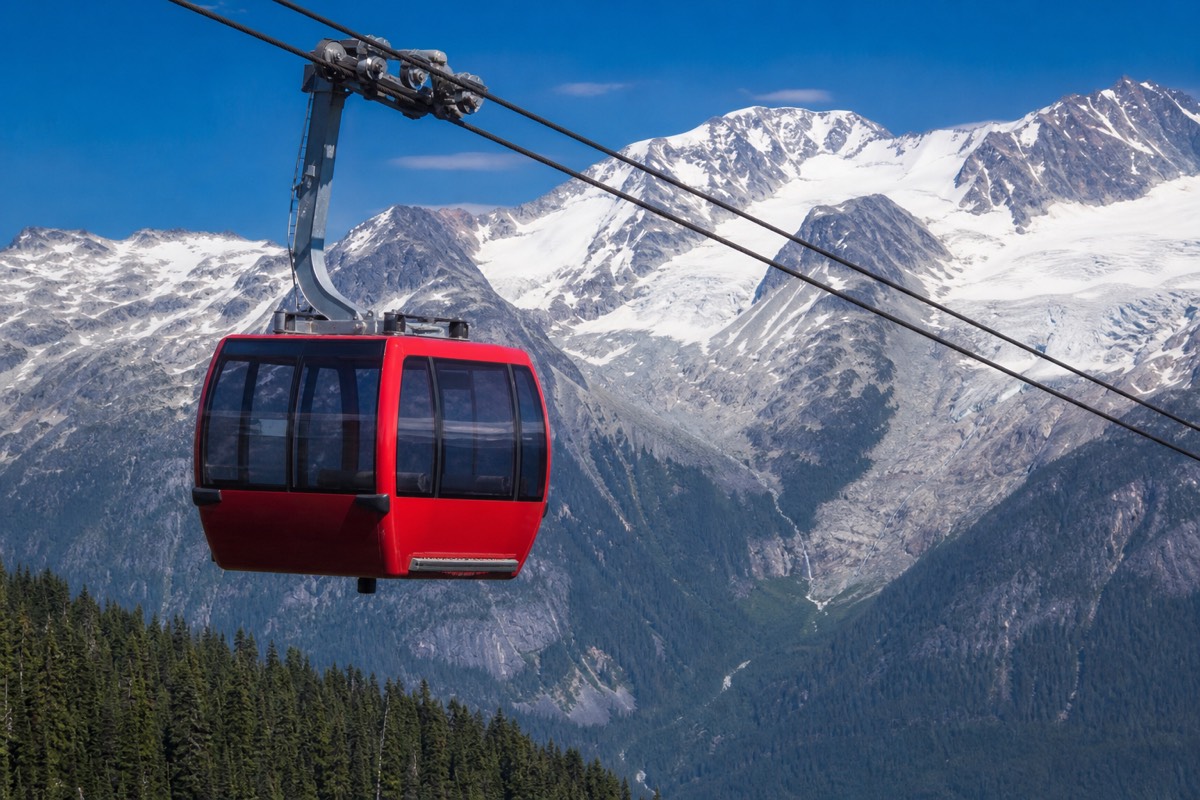
Yes. Non-skiers can buy a winter sightseeing ticket to ride the Peak 2 Peak Gondola and the mountain lifts without skiing. You get the same record-setting crossing, snow-draped alpine views and lodge dining as skiers. Sightseeing lift access follows the resort’s seasonal operating calendar.
Winter does not lock the gondola to skiers. A sightseeing ticket gets non-skiers up to the Roundhouse and across the valley to Blackcomb, where the alpine is buried in snow and the views run to the horizon on a clear day. It is one of the best ways to feel the scale of a Whistler winter without any gear or skill. Riding the Peak 2 Peak Gondola in winter also connects the mountain lodges, so you can lunch at altitude and ride back down. The details below cover the crossing.
| Detail | Figure |
|---|---|
| Crossing span | 4.4 km, up to 436 m above the valley |
| Crossing time | about 11 minutes |
| Winter access | included with a lift ticket, or a sightseeing ticket for non-skiers |
| 2026 to 2027 season | opens November 20 runs to about mid-May |
| Scenic ride rating | 4.5, over 89,000 booked |
Is Scandinave Spa worth it in winter?
The Scandinave Spa is arguably at its best in winter, with hot Nordic baths steaming against the snow and silent forest all around. Entry starts around CA$118 on weekdays and climbs on weekends and holidays. It is quiet, adults-focused and a few minutes from the village, so it pairs well with a cold day outdoors.
After a morning on a snowmobile or the frozen lake, few things beat sinking into a hot outdoor pool while snow falls through the cedars. The Scandinave baths run the Nordic cycle of hot, cold and rest in silence, spread across pools and saunas in the forest near Lost Lake. It leans adult and calm, so it is not the pick for young kids, but it is a highlight for couples and anyone thawing out after the cold. Book ahead in peak weeks, and confirm the day's rate on the live listing, since prices step up on weekends and around the holidays.
The routine itself is simple: a few minutes in a hot pool or sauna, a brisk plunge in cold water, then rest by a fire or in a quiet solarium, repeated as long as you like. Silence is the house rule, and the minimum age is 19, so this is grown-up time rather than a family stop. Weekday entry starts around CA$118 and climbs on weekends and holidays, with towels and robes for rent on site. The pools cap their numbers to hold the calm, which is exactly why a slot can sell out in the busy weeks, so reserve a time before you arrive.
What else fills a Whistler winter evening?
Evenings run on the village. Tube at the Coca-Cola Tube Park, skate the Olympic Plaza loop, take a sleigh ride behind draft horses, or walk the Vallea Lumina light trail through the forest. Then the car-free village turns to dinner, apres-ski patios and shops, all within a short, snowy walk.
The lighter end of winter is where families and non-adventurers thrive. The Coca-Cola Tube Park, the first stop up the Whistler Village Gondola and free to reach runs groomed tubing lanes with a conveyor carpet back to the top; winter hours run to around 6pm. Sleigh rides slide through the Callaghan or up on Blackcomb, often with a fondue or hot-chocolate stop. Vallea Lumina lights up the forest on Cougar Mountain after dark for about CA$50 to 55 for adults. The night usually ends where every Whistler day does, in the pedestrian village. For quieter corners, browse our hidden gems, and for the budget angle, our list of free things to do in Whistler.
A sleigh ride is the classic couples' outing, gliding behind a pair of draft horses through the snow-hushed Callaghan or across the lower slopes of Blackcomb, usually wrapped in blankets with a stop for hot chocolate or a fondue dinner. It asks nothing of you but the willingness to sit still and watch the forest slide by. Families do well on the earlier daytime runs, while couples tend to book the after-dark ride, when the trees are lit and the cold makes the warm drink taste twice as good.
| Evening option | Where | Good to know |
|---|---|---|
| Coca-Cola Tube Park | First gondola stop | Free to reach, hourly tickets, to about 6pm |
| Olympic Plaza skating | Village core | Free loop when conditions allow |
| Sleigh ride | Callaghan or Blackcomb | Often with fondue or cocoa |
| Vallea Lumina | Cougar Mountain | Book ahead, dress warm |
How much does a non-ski winter day in Whistler cost?
A non-ski winter day scales to any budget. A free day of village strolling, Olympic Plaza skating and a snowy walk to Lost Lake costs only lunch. A mid-range day with the gondola, the tube park or Vallea Lumina runs roughly CA$25 to 150 a head. The marquee guided adventures sit higher, from about US$164 for ice fishing and US$249 for snowmobiling.
Winter here can be lavish or nearly free. Skating the Olympic Plaza loop, strolling the lit village and walking the snowy Valley Trail cost nothing, and a tube-park hour or a museum visit keeps a family busy for the price of a couple of lift-line coffees. The guided backcountry days are the big spend, because the fee covers the machine or the heated shelter, the gear and the guide who keeps you safe. The table sorts a winter day without skis into three budget tiers, all planning allowances rather than fixed quotes.
| Budget tier | What you get | Roughly per person |
|---|---|---|
| Free | Village stroll, Olympic Plaza skating, snowy Valley Trail walk, tube-park base area | CA$0 |
| Mid | Peak 2 Peak sightseeing, tube park hour, Vallea Lumina, museum entry, snowshoe rental, weekday spa | CA$25 to 150 |
| Splurge | Guided ice fishing or a backcountry snowmobile run | US$164 to 249+ |
Attraction and spa prices are approximate Canadian gate rates; guided-tour figures are the operators' listed starting rates in US dollars. Confirm both on the live listing before you commit.
How do you plan a non-ski winter day?
Pair one big cold-weather adventure with one warm reward. A snowmobile or gondola morning, a spa or lunch in the middle, then tubing or a night walk in the evening fills a day without skis. Families should slot in the tube park and Vallea Lumina; couples lean on the spa and a sleigh ride.
Winter days are short, so a little structure goes a long way. Book the guided adventure, snowmobiling or ice fishing, in the morning when you are fresh and the light is good. Use the middle of the day to warm up, whether that is the Scandinave baths, a lodge lunch off the gondola, or the museums in the village. Save the low-key fun, tubing, skating or the Vallea Lumina walk, for the evening. Families travelling with children will find the day-by-day version in our guide to families with children, and the contrast with the green season is in our guide to the summer season. The template below adapts to any pace.
| Time | Plan |
|---|---|
| Morning | Snowmobile run or ice fishing, or ride the gondola for the views |
| Midday | Scandinave baths, or lunch at a mountain lodge |
| Afternoon | Snowshoe at Lost Lake, or browse the village and museums |
| Evening | Tube park or skating, then dinner and the Vallea Lumina walk |